The full story
An Intentional Display of Force
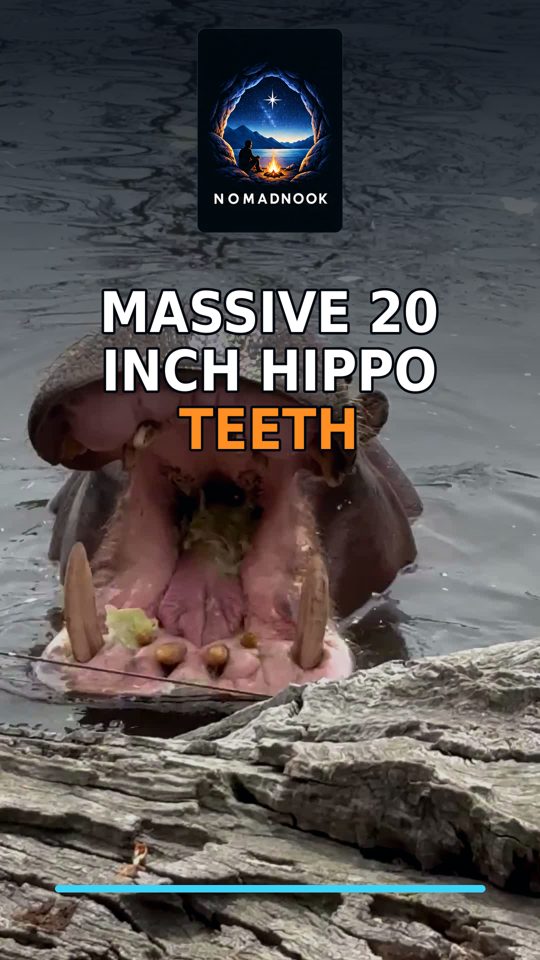
While humans usually yawn when tired, a hippopotamus opening its mouth wide in the water is often performing a deliberate threat display. By peeling back its lips and extending its jaw up to an angle of roughly 150 degrees, the hippo shows off massive lower canine teeth that can reach around 20 inches in length. This aggressive posture serves as a visual warning to potential rivals, demonstrating the animal's physical power without immediately resorting to violence.
The lower canines and incisors of a hippo are constantly sharpened as they grind against the upper teeth. Combined with extraordinarily strong jaw muscles, this display signals to nearby animals that any trespass into the hippo's space could lead to a dangerous fight.
Protecting Territorial Boundaries
Space in preferred aquatic environments like rivers and lakes is limited, creating intense competition among dominant male hippos. A hippo uses its gaping mouth display to establish social hierarchy and mark out its domain. If an intruder ignores the wide-mouthed warning, the display often escalates to water-snorting, loud grunting, or physical combat.
Misinterpreting the Gape as Fatigue
Because the jaw stretch closely resembles human yawning, casual observers often mistake it for a sign of sleepiness or relaxation. In truth, a gaping hippo is fully alert and actively defending its territory, making this action one of the most widely misunderstood warning signs in nature.
Quick facts
- A hippo can open its jaw to an angle of roughly 150 degrees during a warning display.
- The lower canine teeth of an adult hippo can reach lengths of around 20 inches.
- Friction between the upper and lower teeth keeps the tusk-like canines sharp.
- Despite their massive teeth and dangerous bite, hippos eat mostly short grasses.
- Gaping is typically paired with snorting or splashing to warn off nearby rivals.
Frequently asked questions
While hippos may stretch their jaws when resting, the wide gaping display seen in the water is usually a territorial warning sign rather than a indication of fatigue.
A hippo's large lower canines and incisors are used almost exclusively for defense and fighting over territory. They use their flat molars in the back of the mouth to chew grass.
Hippos possess one of the strongest bite forces among land mammals. Their sharp, long canines combined with immense jaw strength make them formidable defenders of their territory.