The full story
How the Forked Tongue Samples the Air
Snakes experience their environment primarily through chemical cues. When a snake flicks its tongue, the tiny tips collect microscopic odor particles floating in the air. Because the tongue is split into two distinct prongs, it can sample chemical concentrations from two slightly different points at once, helping the animal determine which direction a scent is coming from.
Once the tongue retracts back inside the mouth, it delivers those captured molecules to a specialized sensory structure located in the roof of the mouth called the Jacobson's organ, or vomeronasal organ. Neural pathways then send these chemical signals directly to the brain, allowing the snake to process detailed information about its surroundings.
Essential for Hunting, Mating, and Navigation
This specialized sense, known as chemoreception, is vital for a snake's daily survival. Because many species have limited vision or lack acute hearing, tongue-flicking helps them track down prey trails, detect approaching predators, and locate potential mates across long distances.
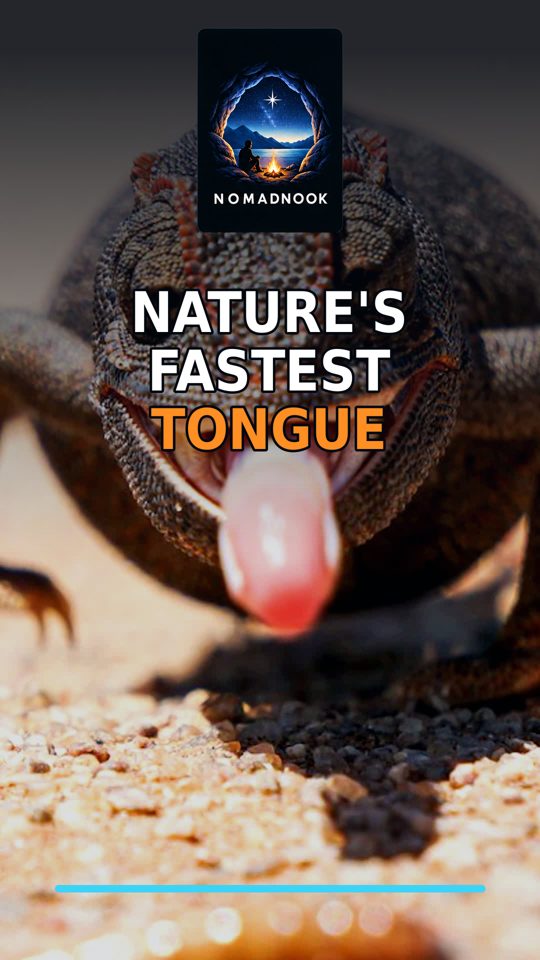
While snakes are famous for this behavior, they are not the only reptiles that rely on it. Monitor lizards and tegu lizards also possess deeply forked tongues and use them in a nearly identical manner to navigate their habitats and search for food.
Clearing Up Common Misconceptions
A widespread myth suggests that a snake flicks its tongue to threaten potential attackers or signal an immediate strike. In reality, tongue-flicking is a routine information-gathering behavior rather than a display of aggression. An alarmed snake may flick its tongue more rapidly simply to gather extra data about a potential threat.
Another persistent misconception is that a snake's tongue can sting or inject venom. The tongue is entirely soft, muscle-based, and physically incapable of piercing skin or causing harm. Venom is delivered strictly through specialized teeth called fangs.
Quick facts
- A snake's forked tongue allows it to detect scent differences between the left and right sides of its head.
- The sensory structure that processes captured scent molecules is called the Jacobson's organ.
- Snakes flick their tongues more frequently when exploring unfamiliar areas or following scent trails.
- Monitor lizards also rely on forked tongues to gather airborne chemical cues.
- A snake's tongue is completely soft and contains no venom or stingers.
Frequently asked questions
Snakes can draw air through their nostrils, but they rely primarily on their tongue and Jacobson's organ to detect and analyze directional scents.
No, a snake's tongue is completely soft and harmless, functioning solely as a sensory organ.
The split tips allow the snake to sample scents from two directions simultaneously, helping it pinpoint where an odor originates.